

A true family mystery
An interview with Erica Colahan

Where to get it
My review
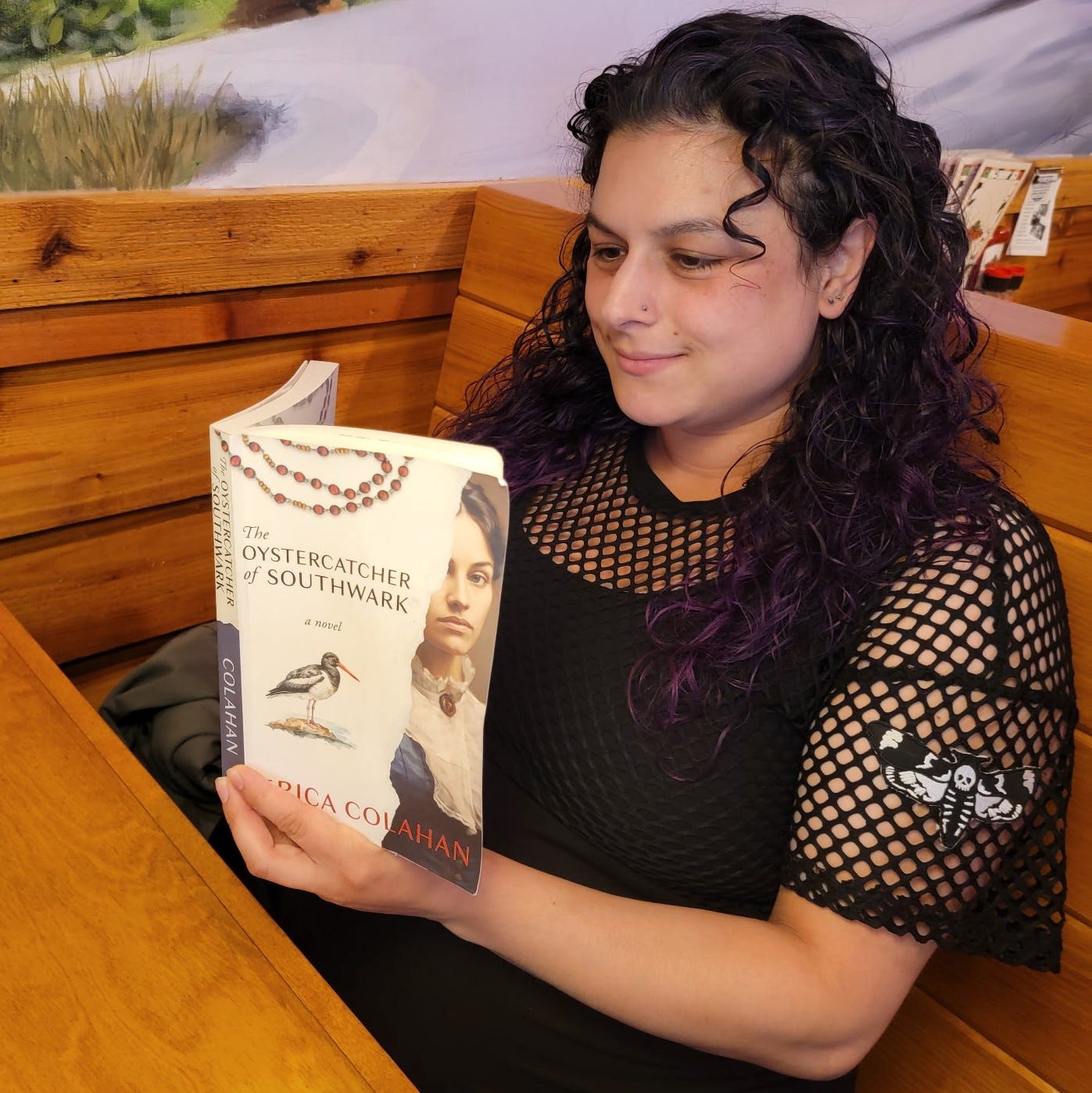
In celebration of the one year anniversary of The Oystercatcher of Southwark, I sat down with Erica Colahan Ruggieri to learn more about the behind the scenes. I was interested to read The Oystercatcher of Southwark because of the dual timeline and the fact that it was based on the author’s real-life family history.
Mary is an Italian-Catholic immigrant in love with a Jewish Socialist, Jakob, in 1897. She’s disowned by her family and leaves behind her dreams for the future to be with Jakob.
In 2018, all Bella knows is that her great-great-grandmother, Mary, died in an asylum, accused of trying to drown her children. Bella is navigating divorce and grief when she’s contacted by Sophie, who claims to be related to Jakob. Bella sets out to learn the truth of what happened to Mary and learns a lot about herself on the journey.
I felt the greatest strength of Oystercatcher was Colahan’s ability to portray characters who are flawed, facing difficult circumstances, and ultimately relatable in their humanity.
Erica was kind enough to discuss The Oystercatcher of Southwark with me.
The interview
Tell me about your daily life. What are you doing if you're not writing?
I'm the mother of five children, so my daily life is filled with the usual tasks associated with raising humans. I work full-time as an Accounts Payable Manager in veterinary healthcare and am an avid reader. When I'm not reading and writing creative fiction, I enjoy taking long walks with my dog, listening to live music, cooking, knitting, and kayaking on the local lake.
This book is partially based on the true story of your own family. How did the idea for the fictional account start?
I grew up outside Philadelphia hearing rumors that my great-great-grandmother Mary tried to drown her children and then herself in the Delaware River before being committed to an asylum. Captivated, I pictured the scene every time I passed the river, and the story has percolated since childhood. At some point, a family member suggested someone write a novel about Mary, and I decided it was time to research and bring this difficult story to light. Historical fiction is a powerful vehicle that enables us to learn from the past and brings healing to the present.
There’s a rich cast of characters set in two different time periods. How do your personal interests show up in the characters or plot?
Most of the characters in the novel are based on actual people from my family and historical figures. The modern-day heroine, Bella, is based on a conglomerate of every female in my large extended family. She represents myself, my mother, my grandmothers, aunts, and female cousins, and carries our collective interests & dreams.
Mary's nicknames are birds, and birds play a big metaphorical role in the book. How did that come about?
I wanted to incorporate elements of Charlotte Brontë's novel, Jane Eyre, into my book because I admire Jane's bold decisions as she navigates the ultimate struggle between independence and autonomy versus loyalty and love—both familial and romantic. Mary's journey in Oystercatcher also includes these elements. One of my favorite passages from Jane Eyre is "I am no bird; and no net ensnares me." This theme winds through Mary's life, so it felt natural to employ different bird nicknames for her.
Which character was the most interesting to write and why?
Vincenzo Carpinelli is a fictional character who introduced himself to me as a sort of conduit character early in my writing. The story needed a centralized person who could connect the characters and bring information from one to another. A fishmonger at the market was the perfect solution, and Cenzo answered the call. He's sweet, funny, and resourceful. He's also utterly devoted to our heroine, and for that, I adore him.
Did real life ever change the trajectory of the plot or characters as you wrote the book?
I continued researching Mary's story with my mother while writing the first draft of Oystercatcher. As we uncovered more facts, the story took a slightly different course. There is one scene in the book where Bella and Sophie are at the Philadelphia Archives. In reality, it was my mom and I who found the asylum register there. Once I saw Mary's name listed on the intake ledger, I decided to dig deep into her experience at Blockley. The asylum scenes were challenging to write because of their emotionally charged and uncomfortable nature. I may have chickened out, but seeing my ancestor's name in ink gave me the determination I needed to bring her difficult experience to light.
Where can we find you online to keep up with your future stories?
I have a blog on my website, www.ericacolahan.com, where I share author news and stories of humor & hope.
Thanks for taking the time to discuss The Oystercatcher of Southwark with me, Erica.
Thank you so much for the interest!
I enjoyed this book a lot, so it was fun to read more about how the characters came to life. The quote from Jane Eyre really resonates—I love seeing how contemporary novels connect with my old favorites!